Museums face a specific audio problem: multiple exhibits often sit close together, each wanting to tell its own story, but a single loudspeaker’s sound doesn’t respect exhibit boundaries. Without directional control, narration from one display bleeds into the next, competing soundscapes turn a gallery into noise, and visitors struggle to hear the exhibit they’re actually standing in front of.
Directional audio solves this by delivering sound only to the visitor standing in the intended listening zone, while an exhibit metres away runs entirely different audio without interference. All this without headphones, or complicated QR codes on the walls.
Why curators and facility managers use directional sound
- Side-by-side exhibits, independent audio. Two displays a few feet apart can each run their own narration, soundscape or archival recording without the visitor hearing both at once.
- Preserves the intended visitor experience. Audio arrives exactly where the exhibit designer intended it, rather than diffusing across the room and losing impact.
- Works with existing exhibit design. Depending on the technology chosen, speakers can be ceiling-mounted, built into plinths or display cases, or concealed within the exhibit itself.
- Reduces overall gallery noise. Because sound is contained rather than broadcast, a gallery with several audio exhibits running simultaneously stays far quieter than it would with conventional speakers.
Which technology fits a museum environment
Different exhibits call for different directional technologies:
- Parametric (ultrasonic) speakers suit single-visitor listening posts — a visitor standing at a designated spot hears narration that a neighbour a metre away won’t pick up. Ideal for interactive or single-object displays.
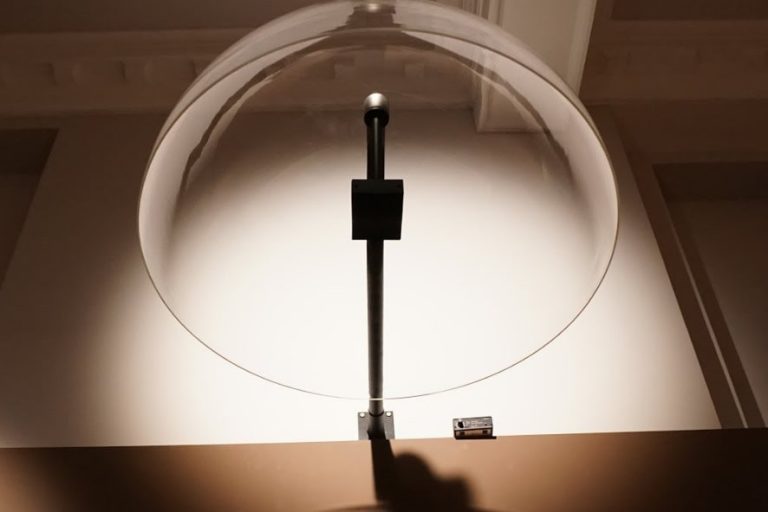
- Dome/localizer speakers suit a fixed listening zone over a bench, reading area or interactive table, delivering consistent audio to anyone seated or standing beneath it.
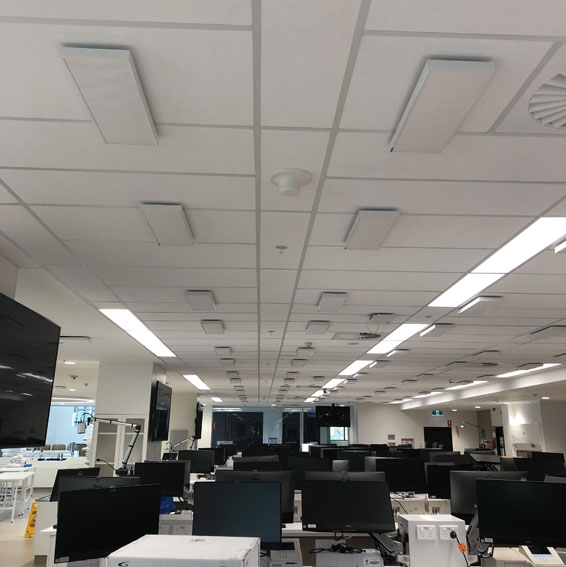
- Planar wave panels suit installations where a slim, near-invisible speaker matters aesthetically — panels can be built into walls, cases or signage without disrupting the exhibit’s visual design.
- Beamforming speakers suit larger exhibit zones or group tours, where several visitors need to hear the same narration within a defined area.
A full technical breakdown of how each type works is available in our directional speaker technology guide.
Buying, hiring, or testing first
Not every museum project needs a permanent purchase. Temporary exhibitions, touring shows and pilot installations are often better served by hire, while permanent gallery redesigns typically call for purchase. Because we hold the largest hire fleet of directional speakers in the world alongside the largest directional speaker product list, we can support either path; and because every speaker we sell or hire has been tested in-house, we can advise on which specific model performs best for your gallery’s ceiling height, acoustics and exhibit spacing rather than working from a spec sheet alone.
Our demo suite , the only dedicated directional speaker demo facility in the market, lets you hear the difference between technologies before committing to a layout.
Frequently asked questions
Can two exhibits a few feet apart really run different audio without interference? Yes, with the right technology matched to the spacing. Parametric and planar wave speakers are particularly effective at keeping close-proximity exhibits acoustically separate; the right choice depends on exact spacing and ceiling height.
Do directional speakers work with archival or fragile display cases? Yes. Several directional formats — particularly slim planar wave panels — can be mounted externally to a case or built into surrounding plinths without any alteration to the artefact or case itself. Transducer speakers can also be used to make the case the speaker.
Is directional audio suitable for a temporary or touring exhibition? Yes. Hire is common for temporary and touring exhibitions, avoiding the capital cost of a permanent installation while still delivering full directional performance for the run of the show.
How loud is the “spill” into the next exhibit? It varies by technology and installation, but is dramatically lower than a conventional speaker. The right technology choice and correct mounting height reduce it further — this is exactly what a pre-installation demo is for.
Can we test the technology before committing to a full gallery installation? Yes — our demo suite allows curators and exhibition designers to hear multiple directional technologies side by side before finalising a layout or specification.
Discover which directional speaker matches your requirements
Answer a few questions to learn what’s best for you…