Directional audio is not one technology — it’s a category covering several genuinely different approaches to focusing sound into a defined listening zone. Choosing the wrong one for your space is the most common reason a directional speaker installation underperforms. There is not one directional speaker that will handle all installation options. This guide breaks down how each type works, where it excels, and where it falls short, based on hands-on testing of every major directional speaker product on the market.
What “directional audio” actually means
Conventional loudspeakers radiate sound in all directions, like a bare lightbulb. Directional speakers instead concentrate sound energy into a narrow beam or zone, like a spotlight — so a listener standing inside the beam hears clear audio, while someone a few feet outside it hears very little. The technologies below all achieve this effect, but through different physical principles, which is why they suit different environments.
Parametric (ultrasonic) speakers
How it works: Two ultrasonic frequencies, inaudible to the human ear, are broadcast together. As they travel through air, the air itself acts as a natural mixer, demodulating the difference between the two frequencies back down into audible sound — but only along the narrow path the ultrasonic beam travels.
Strengths:
- The tightest, most precise beam of any directional technology — genuinely single-listener audio is achievable
- Sound appears to originate from the surface it’s reflected off, useful for interactive exhibits
- Minimal spill even at close range
Limitations:
- Weaker bass response — some parametric systems need a conventional subwoofer paired alongside them
- Performance is sensitive to air temperature, humidity and obstructions in the beam path
- Higher unit cost than conventional speakers
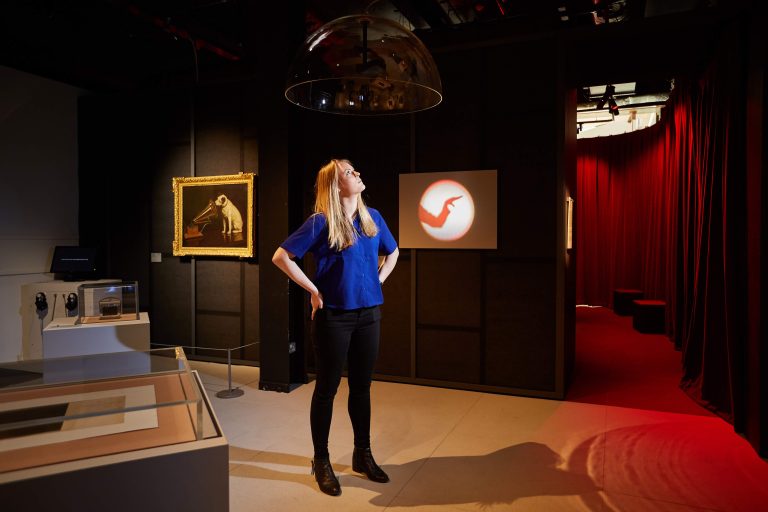
Best suited to: Museum exhibits, single-visitor listening posts, retail point-of-sale messaging, any application where isolating one listener from their immediate neighbour matters more than covering a wide zone.
Phased array / beamforming speakers
How it works: Multiple small drivers are arranged in a line or grid and fired with precisely controlled timing offsets. The resulting sound waves interfere constructively along a chosen path and destructively elsewhere, steering the beam electronically without any moving parts. Beam angle and sweet spot are usually set in the factory to give a predefined sweet spot.
Strengths:
- Different length bars will create different shape sound fields, and allow flexibility in installation
- Fuller frequency response than parametric or planar wave systems — better natural sound and bass
- Can cover a wider, more forgiving listening zone than ultrasonic systems while still controlling spill
Limitations:
- Beam is generally wider than parametric — not suited to true single-listener isolation
- Increased sound bleed in lower ambient level spaces
- Ceiling or wall mounting height affects performance more than with parametric units
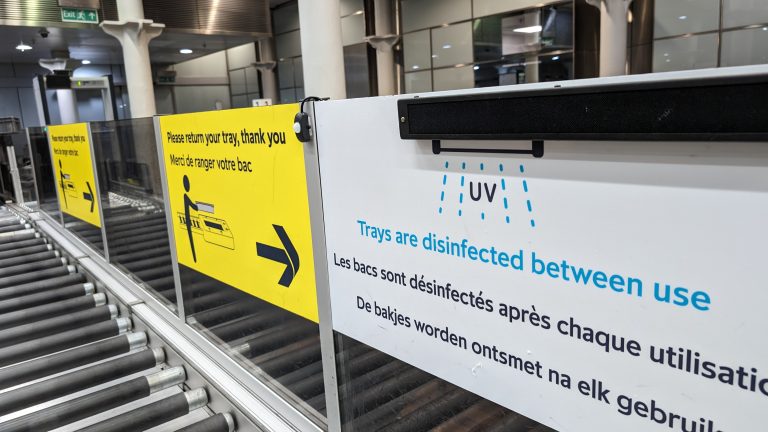
Best suited to: Transit hubs and station announcements (covering a platform zone without bleeding into adjacent areas), open-plan offices and speech-privacy zones, retail zones covering a small group rather than one shopper.
Dome / localizer speakers
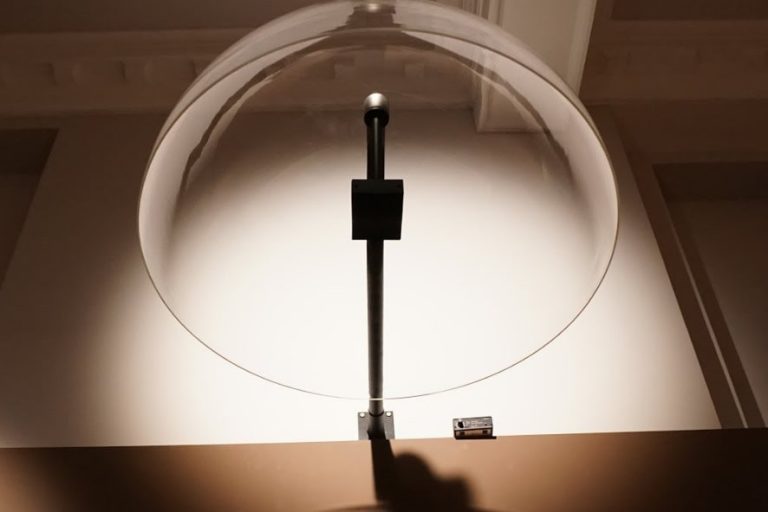
How it works: A hemispherical or dome-shaped enclosure directs sound downward into a contained zone directly beneath it, using speaker geometry and acoustic shaping rather than ultrasonic or electronic beam-steering.
Strengths:
- Simple, reliable, no electronic beam-steering to configure
- Natural, full-range sound quality — closest to a conventional speaker’s tonal balance
- Straightforward installation with steel wire, wall mounts or floor mounts
Limitations:
- Zone is fixed by physical position directly below the unit — no adjustability without moving it
- Zone is generally wider than parametric, so less suited to isolating one listener from a neighbour standing close by
Best suited to: Reception areas, waiting rooms, information kiosks, exhibition stands — anywhere a fixed “sound shower” zone over a chair, desk or display works better than a wider beam.
Planar wave speakers (Sound Shower)
How it works: A flat panel radiates sound as a coherent plane wave rather than the spherical wave a conventional cone driver produces. Because the whole panel surface moves in unison, the sound stays focused and loses far less energy over distance than a point-source speaker, giving a controlled, directional throw without ultrasonic demodulation or electronic beam-steering.
Strengths:
- Thin, flat form factor — panels can be mounted almost flush to a wall or ceiling, or built into signage and displays
- Even, consistent audio quality across the whole listening zone, without the “sweet spot” drop-off some directional technologies have
- No ultrasonic demodulation involved, so tonal quality tends to be more natural than parametric systems, closer to a conventional speaker
- Well suited to covering a defined lane or aisle (e.g. a shop aisle or corridor) rather than a single fixed point
Limitations:
- Zone is generally wider than parametric — not intended for isolating one listener from someone standing close beside them
- Panel size needed for strong bass response can be larger than for other directional formats, so very compact installs may need a supplementary subwoofer
- Effective range and directionality vary meaningfully between sizes, so testing the specific panel in situ matters more than with some other formats
Best suited to: Retail aisles and shelf-edge messaging, banking and service counters, digital signage and information kiosks, museum and gallery installations where a slim, near-invisible panel matters aesthetically as much as the acoustic control.
Choosing between them
| Priority | Best fit |
| Isolating a single listener from someone standing nearby | Parametric (ultrasonic) |
| Covering a defined zone (platform, aisle, stand) with natural sound quality | Beamforming / phased array |
| Fixed point coverage, simple install, ceiling-mounted | Dome / localizer |
| Slim, near-invisible install with even coverage along an aisle or corridor | Planar wave |
| Short-term deployment (trade show, event) | Any of the above, available for hire rather than purchase |
No single technology is “best” — the right choice depends on your space, your budget, and whether the priority is isolating individuals or covering a defined zone. This is also why testing before committing matters: a speaker that performs well in one room’s acoustics can underperform in another with different ceiling height, reflective surfaces or ambient noise.
Frequently asked questions
What is the difference between directional and ultrasonic speakers? Ultrasonic (parametric) speakers are one specific type of directional speaker. “Directional” is the broader category; ultrasonic describes the particular technology some directional speakers use to achieve that effect.
Can directional speakers be heard outside their beam at all? Some sound spill is normal with every technology — the degree varies by type, installation height and room acoustics. Parametric systems typically have the least spill; dome and beamforming systems have somewhat more but still far less than a conventional speaker.
Do directional speakers work for outdoor spaces? Yes, though performance depends on the technology. Beamforming systems tend to handle outdoor and semi-outdoor environments (transit platforms, canopied areas) better than parametric systems, which are more sensitive to wind and air movement.
Is directional speaker technology available to hire, or only to buy? Both. Hire is common for trade shows, temporary exhibitions and short-term installations, while purchase suits permanent museum, retail or transit deployments.
How do I know which type is right for my space? The reliable way is to test in the actual environment — ceiling height, room acoustics and ambient noise all affect real-world performance in ways spec sheets don’t fully capture.
Discover which directional speaker matches your requirements
Answer a few questions to learn what’s best for you…